General information for homeowners, not mortgage or financial advice. Talk to your lender or a licensed mortgage professional about your own situation.
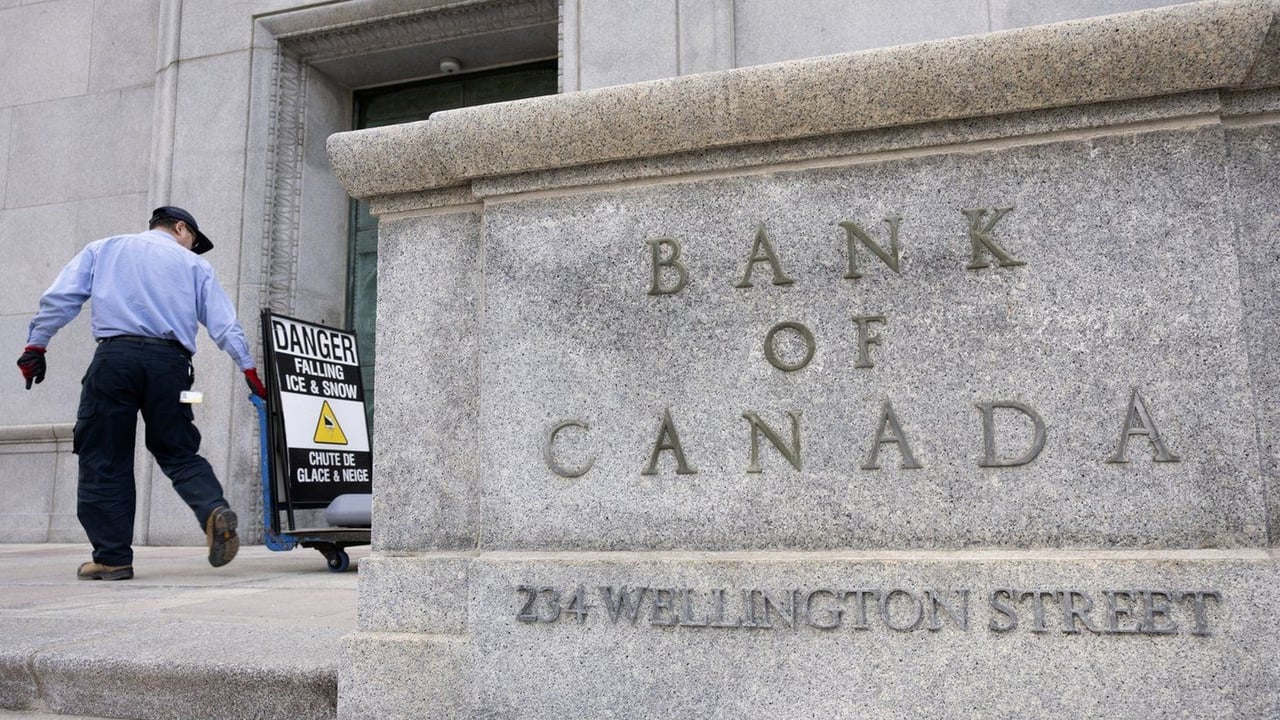
If your mortgage term ends in the next few months, late October is a good time to get organized. The Bank of Canada makes its next interest rate announcement on Wednesday, October 28, 2026, at 9:45 a.m. ET, along with its quarterly Monetary Policy Report (Bank of Canada). After that, the last scheduled decision of the year is December 9 (Bank of Canada, schedule).
Nobody knows what the Bank will decide, and this post doesn't try to guess. What you can control is how prepared you are, whatever happens. Here's what's going on and a practical checklist to work through with your mortgage professional.
What's happening with rates right now
- The Bank of Canada's policy rate is 2.25%. It has been at that level since late October 2025 and was held again on September 2, 2026 (Bank of Canada).
- Economists are watching closely. The Canadian Press reported on October 16 that RBC's assistant chief economist calls the October 28 meeting "live," meaning a hike is possible, although it isn't his base case. As of Oct. 16 (Friday afternoon), financial markets put the odds of a quarter-point hike at about 34%, according to LSEG Data & Analytics (CityNews / The Canadian Press). Odds like these change often, and they're not a forecast.
- Fixed rates have already moved. All six big banks raised their advertised fixed mortgage rates over roughly five weeks, by up to half a percentage point depending on the term (Yahoo Finance, Oct 11). National Bank was the latest on October 16, bringing its advertised 5-year uninsured special to 5.14%. The same report noted that the 5-year Government of Canada bond yield closed at 3.525%, below its 52-week high of 3.729%, and that some other lenders had started trimming select fixed rates (Canadian Mortgage Trends). These are banks' own advertised rates. Rates through mortgage brokers can differ.
Why fixed and variable rates move differently
Fixed rates tend to follow bond yields, especially the 5-year Government of Canada yield, rather than the Bank of Canada's decisions (Yahoo Finance). Variable mortgages are often priced as the lender's prime rate plus or minus a set amount (FCAC), and the Bank of Canada says its policy rate affects banks' prime rates, which are used for mortgages and lines of credit (Bank of Canada).
What a half-point can mean
Yahoo Finance gave a hypothetical example. On a $400,000 balance with 22 years left, a rate of 4.64% works out to about $2,411 a month, and 5.14% to roughly $2,521. That's about $110 more a month, or about $6,600 over a 5-year term (Yahoo Finance). Your numbers will be different, so you can use the FCAC Mortgage Calculator to run your own.
Your renewal rate-check: 6 things to do now
1. Find your maturity date, and don't let it roll over by default
Look up the date your current term ends. If your lender is federally regulated, such as a bank, it must send you a renewal statement at least 21 days before the end of your term. The statement must show the balance, rate, payment frequency, term and fees, and say that the offered rate won't increase before your renewal date. If you don't act, your mortgage may renew automatically, and the statement will say if that's the plan (FCAC, Renewing your mortgage).
21 days isn't much time to compare offers. The FCAC suggests you start shopping around a few months before your term ends rather than waiting for the letter.
2. Ask about a rate hold
Ask your current lender, and at least one other lender or a mortgage broker, whether they'll hold a rate for you while you decide, and how long the hold lasts (Yahoo Finance). Terms vary by lender, so get the details in writing.
3. Compare and negotiate
You don't have to renew with the same lender. The FCAC says you may qualify for a discounted rate that's lower than the one in your renewal letter. It suggests telling your lender about offers from other lenders or brokers, and having proof of those offers ready (FCAC).
4. Understand what switching lenders involves
- Stress test on a "straight switch": Since November 21, 2024, Canada's banking regulator, OSFI, no longer requires a set minimum qualifying rate when an uninsured borrower moves a mortgage from one federally regulated lender to another at renewal, as long as the loan amount and amortization don't increase (OSFI). The new lender still assesses your application under sound underwriting rules, and policies vary by lender. For insured mortgages, the federal Canadian Mortgage Charter includes letting borrowers switch lenders at renewal without requalifying at the insured minimum qualifying rate (FCAC).
- You still need approval. A new lender may use different criteria than your original one (FCAC).
- Ask about costs. These can include discharge, registration, transfer or assignment fees, an appraisal and administration fees. Ask whether the new lender will cover some or all of them.
- Check how your mortgage is registered. If it's registered as a collateral charge, switching can involve extra steps and fees, and other loans secured by the same charge, such as a line of credit, may need to be repaid or moved too. The FCAC suggests allowing a few months to sort this out.
5. Think about fixed, variable or a mix
This is a personal decision based on your budget and comfort with risk. Some FCAC points to discuss (FCAC, Interest on mortgages):
- A fixed rate stays the same for the term, so your payments stay the same too.
- A variable rate can rise or fall during the term. With fixed payments, more of each payment goes to interest when rates rise. If you have this type of mortgage, the FCAC suggests contacting your lender as soon as possible to discuss your options.
- With adjustable payments, your payment changes when the rate changes.
- Hybrid mortgages split the difference, but they may be harder to transfer to another lender.
- Ask whether a variable mortgage offers a rate cap or a convertibility option, and what it costs.
6. Review the rest of your mortgage, not just the rate
Renewal is a good time to rethink your payment frequency, prepayment privileges and any optional insurance. And think twice before extending your amortization to lower your payments. The FCAC warns that the extra interest can add up to thousands or even tens of thousands of dollars (FCAC).
Thinking about moving in the next few years?
If there's a chance you'll sell or buy within your next term, bring it up before you sign. Ask whether the mortgage is portable (whether you can move it to a new home) and what the prepayment penalty would be if you break it early. The FCAC notes that penalties can run into the thousands of dollars (FCAC, Choosing a mortgage). A 5-year term that fits today might not fit a move in 2028.
It also helps to know roughly what your home is worth. Your equity can affect your options at renewal.
Questions to bring to your mortgage professional
- What's my best rate for each term, and how long can you hold it?
- What would switching cost, and will you cover any of it?
- What are my prepayment privileges and penalties, and is the mortgage portable?
- For a variable rate: adjustable or fixed payments, and is there a trigger point, cap or conversion option?
Want a printable copy?
I'm putting these questions on a one-page Renewal Rate-Check sheet. Message or email me at [email protected] and I'll send you a copy. If you'd like to know what your home might be worth before you renew, ask for a free Home Value Report. It's my opinion of value based on recent nearby sales, not an appraisal, and there's no obligation.
Andrew Persaud, Sales Representative, REVEL Realty Inc., Brokerage
#200B – 1032 Brock Street S, Whitby, ON L1N 4L8
📞 m 416.220.7045 | o 905.357.1700
✉️ [email protected]
🌐 https://homesbyandrew.ca/
This article is general information only and isn't mortgage, financial or legal advice. I'm a real estate sales representative, not a mortgage agent or broker. Rates, market odds and lender policies change often and were current as of the dates cited. Confirm everything with your lender or a licensed mortgage professional before making a decision. No rate, outcome or saving is guaranteed. A Home Value Report is an opinion of value, not an appraisal. Not intended to solicit buyers or sellers currently under contract with a brokerage.
Sources (checked October 19, 2026)
- Bank of Canada, "Interest Rate Announcement and Monetary Policy Report, October 28, 2026": https://www.bankofcanada.ca/2026/10/interest-rate-announcement-and-monetary-policy-report-october-28-2026/
- Bank of Canada, "Policy interest rate" (recent decisions and 2026 schedule): https://www.bankofcanada.ca/core-functions/monetary-policy/key-interest-rate/
- Bank of Canada, "Understanding our policy interest rate": https://www.bankofcanada.ca/2025/06/understanding-policy-interest-rate/
- CityNews / The Canadian Press, "Bank of Canada set for pair of important data drops ahead of 'live' rate decision" (Oct 16, 2026): https://toronto.citynews.ca/2026/10/16/bank-of-canada-set-for-pair-of-important-data-drops-ahead-of-live-rate-decision/
- Canadian Mortgage Trends, "National Bank latest big bank to raise fixed mortgage rates" (Oct 16, 2026): https://www.canadianmortgagetrends.com/mortgage-wire/2026/10/16/national-bank-latest-big-bank-to-raise-fixed-mortgage-rates/
- Yahoo Finance Canada, "All six big banks raised fixed mortgage rates by up to 0.5 points in five weeks" (Oct 11, 2026): https://ca.finance.yahoo.com/news/six-big-banks-raised-fixed-123000955.html
- Financial Consumer Agency of Canada, "Renewing your mortgage": https://www.canada.ca/en/financial-consumer-agency/services/mortgages/renew-mortgage.html
- Financial Consumer Agency of Canada, "Interest on mortgages": https://www.canada.ca/en/financial-consumer-agency/services/mortgages/interest-on-mortgages.html
- Financial Consumer Agency of Canada, "Choosing a mortgage that is right for you": https://www.canada.ca/en/financial-consumer-agency/services/mortgages/choose-mortgage.html
- OSFI, "Backgrounder: Minimum Qualifying Rate (MQR)" (effective Nov 21, 2024): https://www.osfi-bsif.gc.ca/en/news/backgrounder-minimum-qualifying-rate-mqr
- FCAC briefing, "The Canadian Mortgage Charter" (Senate Banking Committee, May 30, 2024): https://www.canada.ca/en/financial-consumer-agency/corporate/transparency/briefing-packages-parliamentary-committee-appearances/standing-committee-banking-may-30-2024/canadian-mortgage-charter.html